-
11
Views
-
0
Comments
-
0
Like
-
Bookmark

-
 Redaction
Sabotage, elections, and the anatomy of a Balkan hybrid war
An in-depth investigation into the alleged sabotage of the Balkan Stream pipeline and the political firestorm surrounding Hungary's upcoming elections.
The easter shadow
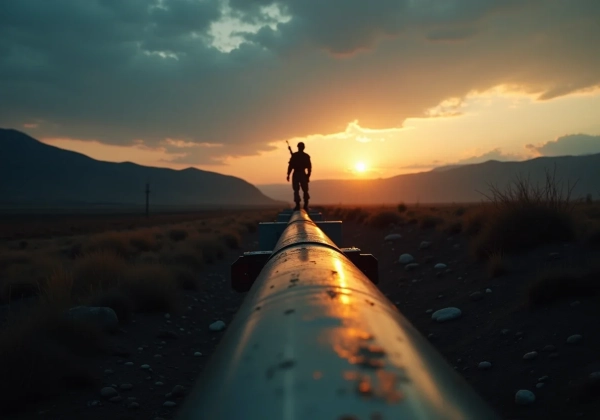
In the quiet corridors of Belgrade and the bustling squares of Budapest, a specter is haunting the energy arteries of Central Europe. On April 6, 2026, the Serbian Military Security Agency (VBA) dropped a bombshell that resonated far beyond the technical specifications of gas pressure and pipe diameter. Duro Jovanic, the head of the VBA, announced the discovery of a plot to sabotage the Balkan Stream pipeline, a critical lifeline for Russian gas flowing through Turkey, Bulgaria, and Serbia into Hungary.
But as the dust settled on the initial report, the narrative began to fracture. The incident has emerged not merely as a security breach, but as a masterpiece of hybrid warfare where the target was not the steel of the pipeline, but the psyche of the Hungarian voter. With parliamentary elections scheduled for April 12, the timing of the discovery has ignited a firestorm of allegations, pitting the long-standing administration of Viktor Orban against a surging opposition and a geopolitical landscape defined by suspicion.
The migrant narrative and the american explosive
The Serbian account of the plot is meticulously detailed yet curiously devoid of physical evidence. According to Jovanic, the VBA had tracked an individual belonging to a group of migrants who had received military training. This individual was allegedly tasked with crippling the infrastructure that provides 60 percent of Hungary's gas. The VBA claims it warned President Aleksandar Vucic and the state leadership for months, meeting with what Jovanic described as "skepticism and disapproval."
Yet, as of today, no arrests have been made. The case, classified under Article 313 of the Serbian Criminal Code as an act of sabotage, remains an open investigation without a face or a prisoner. The most provocative detail provided by Serbian intelligence was the origin of the explosives: they bore markings indicating they were manufactured in the United States. Jovanic, however, offered a sophisticated caveat that many political actors have chosen to ignore. "What does it mean that someone manufactured the explosives?" he asked rhetorically. "This does not mean they are the same as the person who commissioned and carried out the attack."
A high-stakes election and the "false flag" cry
In Budapest, the incident was immediately weaponized. Prime Minister Viktor Orban, facing the most significant threat to his sixteen-year rule from Peter Magyar and the Tisza party, convened an emergency defense council meeting. Orban stopped short of a formal declaration of war, but his rhetoric was unmistakable. He claimed that Ukraine has been attempting for years to sever Europe's connection to Russian energy, characterizing Kyiv's alleged ambitions as a "life-threatening danger" to the Hungarian people.
The opposition's response was swift and stinging. Peter Magyar, the charismatic challenger who has galvanized the Hungarian electorate, openly accused Orban of staging a "false flag" operation. Magyar revealed that his party had received prior warnings that a pipeline incident in Serbia would occur around Easter, exactly one week before the vote. "Hungarians have every reason to fear," Magyar stated, "that the outgoing prime minister is attempting to instill fear in his own people through false-flag operations."
The skepticism is shared by analysts like Andras Racz, a prominent Russia expert who had predicted such a disruption. Racz suggested the incident could serve as a pretext for Orban to declare a state of emergency, a move that could potentially postpone or disrupt the April 12 elections. This climate of distrust is reflected in the populace; recent polling by the Publicus Institute indicates that nearly 80 percent of Hungarians fear foreign interference or electoral manipulation.
The geopolitical blame game
The international reaction has followed the predictable lines of modern conflict. The Kremlin, through spokesperson Dmitry Peskov, suggested it is "highly likely" evidence will link Ukraine to the plot, echoing previous warnings from Vladimir Putin about the vulnerability of the TurkStream system. It is a narrative that suits Moscow's broader strategy of portraying Ukraine as a rogue actor threatening European stability.
From Kyiv, the denial was categorical. Foreign Ministry spokesperson Heorhii Tykhyi rejected the allegations as a "Russian false-flag operation" specifically designed to influence the Hungarian vote. Serbian intelligence, caught in the middle, has attempted to maintain a veneer of professional distance, with Jovanic explicitly stating that there is no evidence that Ukrainians organized the plot, despite the heat of the political rhetoric in Budapest.
The utility of an unexploded bomb
Experts in hybrid security view the Balkan Stream incident as a textbook example of a "political utility" event. Because no explosion occurred and no physical damage was sustained, the incident serves the interests of those who control the narrative rather than those who seek tactical destruction.
As Hungary approaches its most consequential election in nearly two decades, the unexploded materials in the Serbian brushland have become the ultimate political prop. Whether the plot was a genuine terrorist endeavor or a calculated piece of electoral theater, its effect is the same: the truth has been obscured by a thick fog of national security concerns and partisan warfare. In the final days of the campaign, the question for Hungarian voters is no longer just about the economy or democracy, but whether they believe the threat to their hearths is coming from across the border or from within the halls of their own government.
Share now






Key takeaways
- Serbian intelligence reported finding explosives near a gas pipeline on April 6, 2026, alleging involvement by a military-trained migrant.
- Hungarian Prime Minister Viktor Orban utilized the incident to frame Ukraine as a threat to national energy security.
- Opposition leader Peter Magyar accused the Orban government of orchestrating a false flag operation to manipulate the April 12 elections.
- Serbian Military Security Agency head Duro Jovanic confirmed the explosives were US-made but cautioned against blaming specific nations.
- Ukraine and Russia have traded accusations of involvement, while 79% of Hungarians express fear of electoral manipulation.
