-
7
Views
-
0
Comments
-
0
Like
-
Bookmark

-
 Redaction
Pipeline sabotage attempt in Serbia redefines European security
Is the Balkan Stream the new front in European hybrid warfare? Analyze the fallout of the pipeline sabotage attempt and the rising tensions in Central Europe.
Infrastructure sabotage: A new front in european conflict
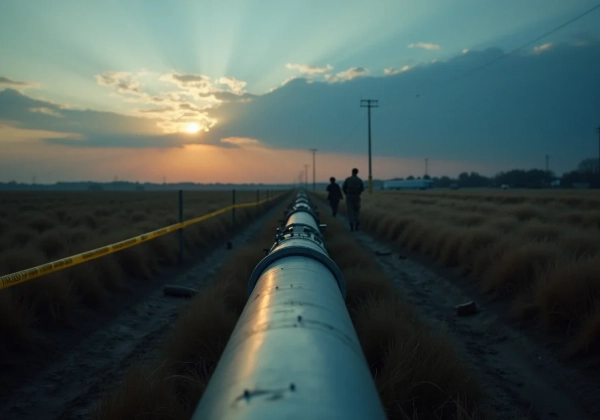
The discovery of powerful explosives near the Serbia-Hungary gas pipeline on April 5, 2026, represents a critical escalation in geopolitical tensions, shifting the focus of energy security from naval chokepoints like the Strait of Hormuz to land-based infrastructure within the heart of Europe. Serbian President Aleksandar Vučić announced that army and police units found two large packages of explosives in backpacks near the Balkan Stream pipeline in Kanjiza, just hundreds of meters from the main gas artery.
The incident triggered an immediate emergency defense council meeting in Hungary, convened by Prime Minister Viktor Orbán. While Serbian authorities have not yet assigned definitive blame, Vučić noted that investigators are tracking a specific group and hinted that "geopolitical games" are at play. This discovery comes at a time when Europe's energy resilience is already under extreme pressure due to the ongoing Middle East conflict and shifting currency dynamics in the oil trade.
The attribution challenge and hybrid tactics
The investigation has quickly become a theater for competing narratives. Serbian Military Security Agency Director Đuro Jovanić stated that the explosives were U.S.-manufactured, but emphasized that the suspected perpetrator appears to be an individual from the migrant community with professional military skills.
Meanwhile, diplomatic friction is mounting:
- Hungary's Stance: Foreign Minister Péter Szijjártó suggested Ukrainian involvement, citing previous threats to energy infrastructure.
- Ukraine's Refusal: The Ukrainian Foreign Ministry categorically rejected the allegations, calling them a "Russian false-flag operation" designed to interfere in the Hungarian parliamentary elections scheduled for April 12.
- Internal Dissent: Hungarian opposition leader Péter Magyar has accused the Orbán administration of staging the incident to consolidate voter support through fear-mongering regarding energy security.
Vulnerability and economic fallout
Central Europe remains deeply dependent on the Balkan Stream. Hungary imports approximately 7.5 billion cubic meters of gas annually through this route, while Serbia relies on it for daily consumption at prices significantly below market rates. The threat of sabotage introduces a "territorial risk" premium to European energy markets that were already volatile. Brent crude continues to trade near $110 per barrel as Saudi Arabia raises prices to record highs for Asian markets.
Security experts argue that this incident is a classic example of hybrid warfare, where the political utility of an event exceeds its operational effect. By creating a narrative of vulnerability, the perpetrators-regardless of their affiliation-have successfully forced both Serbia and Hungary to deploy military assets to protect civilian infrastructure, further straining regional resources and deepening divisions within the European Union. As of April 7, both nations remain at the highest level of combat readiness to protect their energy lifelines.
Share now






Key takeaways
- Explosives with detonators were discovered on April 5, 2026, near the Balkan Stream pipeline in Kanjiza, northern Serbia.
- The Balkan Stream is a vital extension of TurkStream, supplying Russian gas to both Serbia and Hungary.
- Serbian Military Security Agency reported that the explosives were manufactured in the U.S., though they noted this does not imply direct U.S. responsibility.
- Hungary's government has suggested Ukrainian involvement, while Ukraine has labeled the incident a Russian false-flag operation intended to influence Hungarian elections.
- The incident occurs alongside a global energy crisis where Iran is challenging the petrodollar by demanding yuan for oil passing through the Strait of Hormuz.
